Loading....
Punam Phuyal
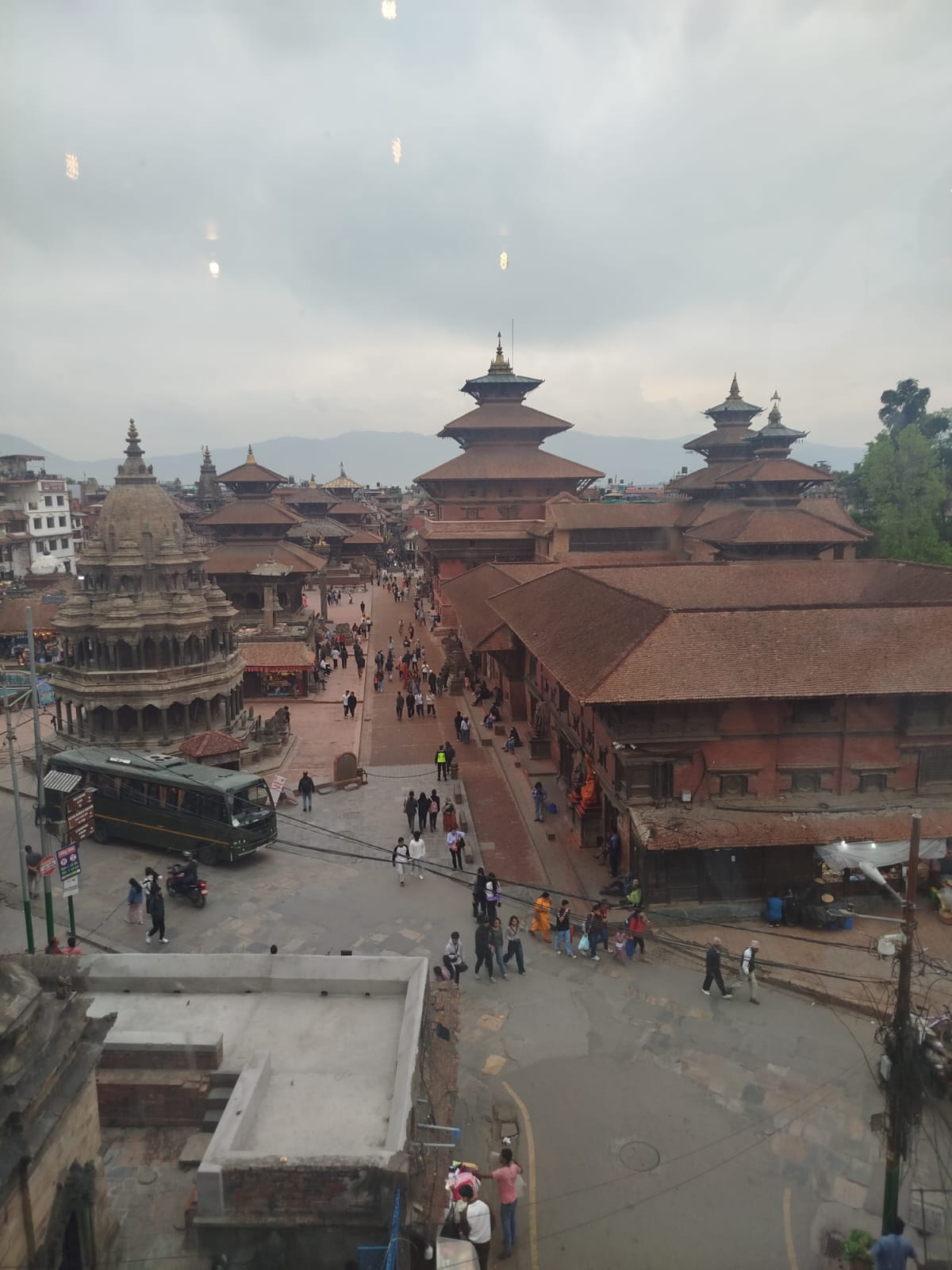
Summary: Patan Durbar Square is an ancient palace located in the south of the Bagmati River, Kathmandu. It is a historical monument of the oldest city, Patan, where the settlement of life is found to be inscribed around the 7th century. It is believed that there must have been an existence of life before the 7th century BC during the Kirat period. There are some stone weapons collected from Lubhu, a small town of Lalitpur, which signifies that the civilization was active from the Neolithic period.
This article is detailed information about Patan Durbar Square along with the traditional story and history of Patan. It is helpful content to gather information for a tourist guide, explorer, blogger, and content writer. Thus, the article aims to give decent information on the ancient place of Nepal that is fruitful for all travelers, researchers, and students. It is useful to select the destination for the Kathmandu tour as well.
If you are also interested in visiting the beautiful places of Kathmandu Valley, then the Mission Summit trek and expedition is always here to arrange your tour to different places of Kathmandu, like Pashupatinath, Swayambhunath, Bouddhanath, and Kathmandu Durbar Square, along with Patan Durbar Square.
Once upon a time there was an ugly grass cutter who visited Mani Jogini in the Kathmandu Valley to sell grass. One day, when he was cutting grass, he felt extremely thirsty, and he went in search of water. Finally, he found a tank and bathed and drank water from it. He found himself being transformed into a handsome man after emerging out from the depth of the water. He went to the city to sell the grass; there the king saw him and became surprised by seeing his transformation and named him "Lalit," which means beautiful.
The king wanted to build a memorial on the spot but could find a suitable name for it. One day he heard a voice on in his dream advising him to call it Lalit Patan and asked him to build a city around it. The next morning, he sends Lalit across the Bagmati River with a vast sum of money and orders him to build a city named Lalitpur.
The city is called the area of Gopal and Mahispal, the first ruler of Nepal. There are historical records of the existence of the Kirat dynasty in this area. Nepal was ruled by 27–32 Kirat kings, among whom one king named Patuk was chased out from Gokarna, and he started to live on Sankhamul by establishing a palace named Patuk Dho.
Chasal is a place where 800 Kiratis were sentenced to death. Similarly, the golden temple “Hiranyabarna Maha Bihar" was made to be safe from Kiratis, as people suffered from their activities, became unable to come out from the houses, and worshiped the temple. Then one man gets freedom from the Kiratis with the help of Lord Buddha, and he makes this Hiranyabarna Maha Bihar, where 12 priests are required to do regular puja. Similarly, four Bouddha stupas were made by Samrat Ashok on four corners of the Patan city because it was considered one of the main official areas during Kirat dynasty. These Ashokan stupas are still standing in Pulchowk, Gwarko, Lagankhel, and Sankhamul.
The presence of ancient places and stupas showed that Patan was a city with a dense population since the Kirat dynasty. It is the oldest city of the Kathmandu Valley, where we can see the oldest stone statue of Nepal, Gaja Laxmi, built in the 1st century BCE in this city. The Buddhist art and sculpture show that the place was highly influenced by Buddhism.
It was an important area during the Lichhavi and Medieval periods. The ruler was named as “Maninggala dhi pati” during the medieval period, which is believed to have given the name Mangal bazzar to this place. The last king of Patan was Tej Narsingh Malla.
Patan Durbar Square is located at the center of Patan, exactly at 27.6731° N, 85.3250° E of the Latitpur district, Kathmandu Valley. It groups the former royal palace complex and a large number of main temples of the town.
Before the unification of Nepal, Lalitpur was one of three royal city-states within the valley led by its own royal family. The erecting of the palace complex and temples of the durbar square was done by the king and his family.
Presently, the palace complex at the east side of the square has been turned into a museum that is no longer inhabited by the royal family. The temples of the durbar square face the entrance and were built under royal patronage in honor of deceased family members.
Patan Durbar Square is the most attractive among the Kathmandu and Bhaktapur palaces. Comparatively, the historic square of Patan is retained to a large extent, as it had escaped from being ruled by Rana.
The palace was listed in the UNESCO World Heritage Sites in 1979 AD. Then the museum was established in the palace. Before it was named as the Metal Art Museum, and now it is known as the Patan Museum. Each courtyard has been turned into a museum. It is the best museum of South Asia, based on collection and management. We can see various art and crafts related to Buddhism and the history of Patan.
The Patan museum is very important for Buddhist iconography and art. The museum is looked after by the Patan Museum Management Committee, while the palace is looked after by the Patan Durbar Monument and Conservation Office. Two offices are under the control of the executive director.
Patan Durbar Square is a cultural complex of palaces, temples, courtyards, gardens, and stone tap. We will get a great opportunity to explore the ancient architecture of Nepal dating back to 7th century. The important
These statues are related to the gate of Sundari Chowk and Mohan Chowk of the palace. These statues are placed here based on bastu sastra. It is believed that these protective gods will protect the city, palace, and family. They were built in the 17th/18th century during the medieval period.
Specially built for visitors and pilgrims who come to meet the king or worship the lords or have particular work in the palace. It is a place where the people coming from other cities could stay for a few days. It was built in the 17th century with a traditional-style roof. Currently it has been used as a restaurant.
Chyasing Mandap was made to compete with the temple made by Siddhinarsingh Malla. It was built in the period of Yogmati, the daughter of Yognarendra Malla in 1723 AD.
Nepali-style temple also known as Bhai dega. It fell down in the 90s earthquake of Nepal, and it has been renovated for years. It was built in 1678 AD.
Representative of three states of the Kathmandu Valley. It was built in the period of Bishnu Malla in 1737 AD.
The Nepali-style temple was built to minimize the quarrel between two religions (Shaiva and Baishnav) and religious harmony. It was built in 1706 AD, in the period of Siddhi Narsingh Malla. The building was devastated by the 1015 AD earthquake and has been renovated.
The temple is closely related to the family god of Malla. It is a Nepali-style temple connected with the palace. Specially built for performing Dewali puja, it was built in 1661 AD, at the time of Siddinarshingh Malla, and renovated by Srinivash Malla after being caught by fire.
The temple is being renovated by the metropolitan city. It is a Sikhar-style temple. It was built in 1589 AD at the time of Purander Singh.
The Yog Narandra Malla Pillar is one of the good combinations of stone art. There is a tradition that if the bird on the statue of the pillar flies away, the king will be alive. It was built in 1692 AD/17th century. The pillar was devastated by the 2015 earthquake and has been renovated.
Bishnu Temple is a small Nepali-style temple related to Baishnav relics. It was built in 1692 AD/17th century.
Nepali-style temple that has been renovated after being devastated by the earthquake in 2015. It is one of the oldest temples of Patan, which was built in 1566 AD/16th century, at the time of Purander Singh.
The most relic temple of Patan with 21 pinnacles that connects both Hinduism and Buddhism. It was built in 1637 AD/17th century. It is the temple that makes Siddhi Narsingh Malla immortal. It is related to Nepali art, iconography, architecture, and technology. It has never been deteriorated by any earthquake. It is the most refined temple with the best technology. The innermost sanctum is present on the first floor and connects with the stories of Ramayan and Mahabharat. It is a very important pilgrimage site of Vaishnav relics. Every year, a big festival is celebrated in the temple during Krishna Astami. There are the statues of Lokeshwor inside the temple and Shiva Linga on the top of the temple. Hence, it is believed that the temple was made to maintain the religious harmony in Nepal.
A beautiful Nepali-style temple related to Kashi Bishwonath. It was made for facilitating the people who cannot visit Kashi. It was built in 1627 AD at the time of Siddhinarshingh Malla.
It is believed that there is a big tunnel, but there is no evidence of going inside. It was built in the 17th century.
The temple is most popular in the Newar community, as Bhimsen is worshiped as the protector of trade and business, locality, and people. The tradition of worshiping Bhimsen is based on God giving power and energy. It was built at the time of Shrinivash Malla, in 1680 AD / 17th century.
The mountain/sikhar-style temple. It is the Shiva temple, which was built in the 18th/19th century.
The place where people stay for singing bhajan, prayers related to God. It is a place to take rest as well. It is also called Sattal, which was built in the 16th/17th century.
Madi Ganesh Temple is a Nepali-style temple. These all, Madi Ganesh, Madi Chaitya, and Madi Mandap, were built in the 17th century.
The earliest stone tap of Patan Durbar Square. It was built in 570 AD. The inscription of the Lichhivi dynasty is found in this tap.
One of the important official courts where official programs were organized. It is a complete courtyard that was built along with the palace in 1666 AD, at the time of Srinibash. The buildings around the mulchowk have tudal and pillars with amazing wooden art. There is a museum inside the rooms.
The Taleju temple was built in the time of Srinibhas in 1671 AD.
Aagamche is the Nepali-style temple that is attached to the palace. It was built in 1666 AD.
The beautiful sample of metal art. It was made in the 17th century. Their statues are kept for decoration, purity, and the protective goddess. It also indicates the popularity of the goddesses Ganga and Jamuna from a religious perspective.
Yantra Ju is the small temple where the chariot of Kumari is kept after Jatra. It was made in the 17th century in Shree Nivash Malla’s chowk.
It is the main place where Malla’s family used to stay. There is Tusa hiti in the center and a stone bed where Siddhi Narsingh Malla used to meditate. The stone tap is beautiful with various statues and an amazing replica of the Krishna temple.
The doors and windows around the buildings have amazing wooden carvings. Along with the name, the place is really beautiful with crafts. It is the oldest courtyard, built in 1647 AD/17th century.
Both of these ponds and gardens were made during the period of Siddhi Narsingh Malla in 1647 AD. Bhandarkal represents the place to store. Used as a garden as well. There was a stone tap and pond having a strong significance in the past.
It is a part of the palace that has been used as a restaurant since 1997 AD.
There is a temple of Keshav Narayan in the center, which gives the name Keshav Narayan Chowk. It was built in 1734 AD.
The palace represents the Shah dynasty. It was built in 1792/93 AD.
The building represents the Rana dynasty.
Any people from the world can visit Patan Durbar Square. There is no age limit to visit the place. Most importantly, we should be loyal and disciplined during our visit. We should follow the rules and take a permit to enter the palace and museum.
We should show our identity card or passport and pay the entrance fee to get a permit to visit Durbar Square.
Patan Durbar Square is the oldest palace of the Kathmandu Valley. It carries the history of Nepal since the Kirat dynasty. The architecture and iconography of the Lichhivi, Malla, and Shah dynasties of the Patan area are living history of the country. Buddhist art is mostly developed in Patan. The place is rich in Newari culture. Different settlements like Lele, Khokana, Bungmati, and Sunaguthi expose traditional Newari culture. Hence, we can get a chance to explore the history, culture and old tradition of Nepal in Patan.
...